
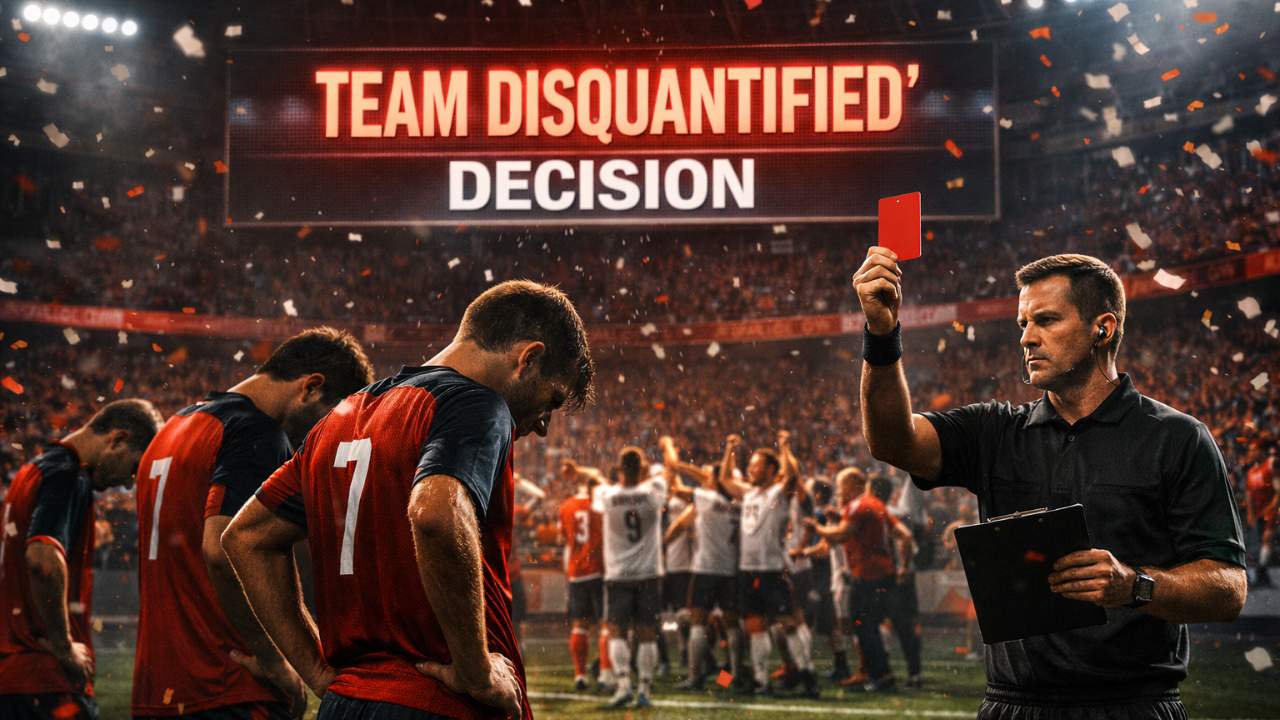
In sports and competitive events, fairness is the foundation of every match. Still, there are situations where the officials have no choice but to announce a team disquantified decision. This can happen in football, cricket, basketball, or any tournament where strict rules are in place.
When a team disquantified ruling is made, it does more than just remove players from the event. It can change the result of the match, affect rankings, and disappoint fans who were hoping for a fair contest. That is why understanding why a team disquantified situation happens is important for players, coaches, and sports followers alike.
This article explains the meaning of a team disquantified decision in simple language, along with the main reasons behind it, the impact it creates, and the steps teams can take to avoid it.
What does “team disquantified” mean?
A team disquantified decision means that a team is removed from a match, tournament, or competition because it broke the rules. The reason may be cheating, misconduct, unfair play, or failing to meet eligibility requirements.
Once a team disquantified ruling is announced, the team is no longer allowed to continue in the competition. In some cases, even earlier results may be cancelled depending on the tournament rules.
In simple terms, team disquantified means losing the right to keep playing because the team violated the official regulations.
Reasons behind team disquantification
There are several situations that can lead to a team disquantified outcome. Some of the most common reasons include:
- Breaking the rules on purpose
- Using unfair methods or cheating
- Playing with ineligible or unregistered players
- Violent behavior during the match
- Ignoring referee instructions
- Match fixing or corruption-related issues
- Repeated warnings that were not respected
Each team disquantified case is handled seriously because it affects the fairness and integrity of the sport.
Real-life examples and situations
A team disquantified case can happen in many different sports. In football, for example, a team may be removed if a player uses fake identity documents or if the club fails to follow tournament eligibility rules. In cricket, a team disquantified decision may come after repeated rule violations, refusal to follow match procedures, or serious misconduct.
These examples show that a team disquantified result is rarely random. It usually comes after a clear violation of official rules.
Impact of team disquantification
When a team disquantified announcement is made, the effects are often immediate and wide-reaching. Players lose their chance to compete, and fans are left disappointed. Tournament schedules may change, and organizers may need to adjust the results or bracket structure.
A team disquantified situation can also create problems for sponsors, event managers, and the reputation of the club or country involved. In serious cases, it may affect how the team is viewed for a long time.
Rules and regulations behind the decision
Every sport has rules designed to protect fair play. A team disquantified decision usually happens when those rules are broken in a major way.
Common rule violations include:
- Sports misconduct
- Unauthorized substitutions
- Breaking fair-play guidelines
- Violating tournament regulations
- Refusing to obey referee decisions
Officials do not make a team disquantified ruling lightly. In most cases, they review evidence, reports, and match details before finalizing the decision.
How teams can avoid disquantification
No team wants to face a team disquantified result. The good news is that many of these situations can be avoided with discipline and preparation.
Teams can reduce the risk by:
- Following all tournament rules carefully
- Respecting referees and officials
- Making sure every player is eligible and registered
- Avoiding aggressive or violent behavior
- Training players on fair play and sportsmanship
- Staying calm under pressure during important matches
When these habits become part of the team culture, the chance of a team disquantified decision becomes much lower.
Importance of fair play in sports
Fair play is one of the strongest protections against a team disquantified outcome. When players respect the rules and their opponents, the game stays competitive, honest, and enjoyable for everyone.
A team disquantified ruling often happens when fair play is ignored. That is why coaches and trainers focus not only on fitness and tactics, but also on discipline, honesty, and responsibility. A well-managed team understands that long-term success depends on more than just winning.
Investigation process behind team disquantification
Before an official team disquantified decision is made, a proper investigation usually takes place. Sports authorities may review footage, examine referee reports, and gather other evidence to confirm what happened.
In many cases, a team disquantified ruling is not issued immediately unless the violation is very serious. Officials first determine whether the issue was accidental, procedural, or a deliberate breach of rules. This careful process helps ensure transparency and trust in the competition.
Psychological impact on players
A team disquantified event can be emotionally difficult for players. Many athletes spend months preparing for a tournament, so being removed from it can feel frustrating, stressful, and unfair.
It can also affect team morale. After a team disquantified incident, players may blame themselves or each other, which can weaken unity and confidence. For this reason, many teams work with mentors or sports psychologists to rebuild focus and motivation.
Media and public reaction
When a team disquantified announcement is made in a major event, it often becomes headline news. Fans react quickly, especially if their favorite team is involved.
A team disquantified case can sometimes lead to debate, especially if people do not fully understand the rules or the evidence. That is why official sports bodies usually explain the reason clearly. Open communication helps reduce confusion and maintain public trust.
Lessons learned from disquantification cases
Every team disquantified incident carries an important lesson. It reminds teams that success is not only about talent, but also about discipline, respect, and responsibility.
In many cases, a team disquantified situation helps future teams become more careful. They learn to follow the rules closely, avoid pressure-based mistakes, and focus on proper conduct. Over time, these lessons can make sports more professional and fair.
Frequently Asked Questions
What does team disquantified mean in sports?
It means a team is removed from a competition because it broke the rules or failed to meet the required standards.
Why does team disquantified happen?
A team disquantified situation usually happens because of cheating, misconduct, ineligible players, or rule violations.
Can a team appeal after being disquantified?
Yes, in some cases a team can appeal, depending on the rules of the tournament or competition.
Is team disquantified always permanent?
Not always. In some cases the team may be banned permanently, while in others the decision may apply only to that event.
Does team disquantified affect rankings?
Yes, a team disquantified decision can change standings, results, and the overall structure of the competition.
Conclusion
A team disquantified decision is one of the most serious actions in sports. It is usually taken only when rules are broken or fairness is damaged. Understanding why a team disquantified situation happens helps players, coaches, and fans see how important discipline and sportsmanship really are.
In the end, every team disquantified case sends the same message: winning matters, but playing fair matters even more. Respect for the rules is what keeps sports honest, competitive, and worth watching.
